
Commercial · Strata · Residential | 9477 Cedar Street, Mission, BC V2V 6X5
MOSS CONTROL & FERTILIZING
Wet springs, heavy shade and compacted soil make moss almost inevitable in the Fraser Valley. Our moss control Mission BC service kills the moss, opens the lawn up and gives the grass a chance to fill back in — instead of treating the same patch every year.
WHY MOSS WINS
Moss is not a weed in the usual sense. It is a plant that thrives in exactly the conditions grass dislikes: low light, wet soil, compacted ground and low pH. If your lawn has moss, those conditions are the real problem. Spraying or raking the moss away without changing them simply clears a space that moss will reclaim inside two seasons. That is why so many homeowners end up buying moss control Mission BC products year after year without ever fixing the cause.
Getting on top of moss is mostly about three things. First, treat and remove what is there so the surface is open again. Second, aerate or power rake so water drains and air reaches the root zone. Third, get grass growing in the gaps quickly, because grass is the best moss prevention there is. Add a sensible mowing height and a feeding program and the same lawn that was green and spongy in April can be dense turf by midsummer.
The reverse is also true. A shaded lawn that is cut too short, never aerated and never fed will always have moss, no matter who treats it. When we quote moss control Mission BC properties need, we quote the treatment and the recovery work together, because doing one without the other wastes money.
Some properties in Mission will never be completely moss free. North-facing slopes under cedar trees, and areas where a downpipe dumps water against the house, will always run damp. For those spots we talk about management rather than elimination: a stronger grass species, a raised mowing height, a drainage fix where it is practical, and a treatment schedule that keeps the moss from taking over the lawn again.
WHAT IS INVOLVED
Treatment, removal and recovery — not just a spray and a rake.
We look at shade, drainage, soil compaction and existing grass before recommending a moss control Mission BC program.
A targeted application to kill the moss without harming the surrounding turf, applied at the right time of year.
The treated moss is raked or power raked out so the surface is open for seed and fertilizer.
Relieves compaction so water drains and air reaches the roots, which is the step most DIY moss control Mission BC jobs skip.
Grass seed applied to the cleared areas so turf fills in before the moss has a chance to return.
A feed timed to the growing season to thicken the turf, since dense grass is the best long term moss prevention.
THE PROCESS
The treatment itself is the quick part. Moss takes up the product and blackens within days, which is why homeowners often assume the job is done. It is not: dead moss still sits on the surface, blocking light and holding moisture against the soil. If you leave it there, the lawn underneath stays thin and wet, and new moss moves in within a season. Removal is the step that makes the difference, and it is the step most one-visit moss control Mission BC offers leave out.
After removal, the lawn usually looks worse before it looks better. Bare patches are visible, and that is exactly the moment to aerate and seed. Core aeration pulls small plugs of soil out, opening channels that let air and water move and giving seed a place to sit. Overseeding right after aeration is far more effective than seeding onto a hard, compacted surface in the middle of summer.
Timing matters as much as the method. Moss is most vulnerable in spring and early autumn when it is actively growing. Summer treatments are less effective and can stress turf that is already dry. That is why we schedule most moss control Mission BC work in April and September, then follow up with feeding when the grass is ready to use it.
A realistic expectation is this: one spring visit to treat and remove, one aeration and overseed, and then a maintenance routine with the lawn cut at the right height through summer. Most lawns show a clear improvement by midsummer, and a properly recovered lawn typically needs only a light follow-up treatment the following year rather than a full reset.
PREVENTION
Once the moss is gone, the goal is to make the lawn a poor habitat for it. The single most effective change is mowing height. Lawns cut very short let light and air straight to the soil surface, which moss loves. Raising the deck by ten or fifteen millimetres through the shaded months shades the soil, holds moisture more evenly and helps grass out-compete moss without any product at all.
Drainage is the second lever. If a downpipe discharges onto the lawn, a low spot holds water after every rain, or the soil is heavy clay that never dries, no amount of moss control Mission BC treatments will hold. Sometimes the fix is as simple as extending a downpipe or aerating twice a year. Sometimes it needs a small drainage correction, and we will say so honestly rather than selling repeat visits.
Feeding is the third. A lawn that is fed at the right times grows denser, and dense grass leaves no room for moss to establish. The mistake is feeding heavily in the heat of summer when the grass cannot use it. Two or three well-timed applications through the growing season do more than six light ones spread randomly.
Hedge and tree pruning also plays a part. A shaded lawn under an overgrown cedar hedge will always struggle. Thinning the canopy or raising the skirt of a tree lets more light through and can transform a mossy patch into decent turf. When we quote moss control Mission BC properties need, we look at the light before we look at the product.

COMBINE THE WORK
Moss rarely happens on its own. These services address the conditions that caused it.
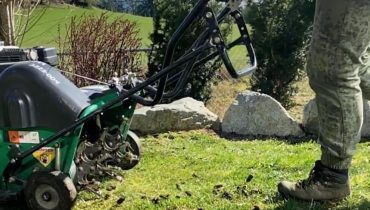
Opening the soil is the most effective long term moss control Mission BC lawns get, because moss cannot thrive in free-draining ground. Lawn aeration in Mission BC
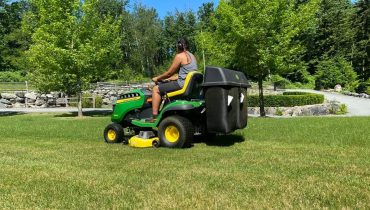
Cutting at the right height through the shaded months keeps grass dominant over moss. Lawn mowing in Mission BC

More light means less moss. Shaping an overgrown hedge can change a shaded lawn in one season. Hedge trimming in Mission BC
SIGNS TO WATCH FOR
Moss is easiest and cheapest to deal with before it covers the lawn.
If the lawn feels soft and bouncy underfoot, moss is already forming a layer above the soil.
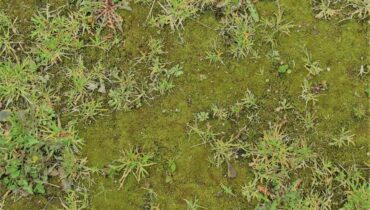
Moss is a brighter, flatter green than grass and spreads in irregular patches, usually in shade.
A thick layer of dead material holds moisture at the surface, which moss control Mission BC treatments alone cannot fix.
Under trees and along north-facing fences, grass thins first and moss follows immediately.
Areas that squelch days after rain are compacted or draining poorly, and moss will keep returning.
If you treat moss every season and it always returns, the underlying conditions are still wrong.
HOW IT WORKS
Call 778-951-5296 or use the form. Photos of the mossy areas and a note on shade and drainage help us prepare.
We check the extent of the moss, the soil and the light, then quote a moss control Mission BC plan that includes recovery work.
Treatment, removal, aeration and seeding are scheduled in the right order, with a follow-up visit if needed.
WHERE WE WORK
Shaded lots from Hatzic to Silverdale and Dewdney to Abbotsford all deal with the same wet coastal conditions. Our moss control Mission BC routes cover them all.
More on lawn care in Mission and our full lawn care services list. For general turf and pest guidance, see Health Canada pest management.
Book an assessment and we will quote moss control Mission BC lawns need to recover properly, not just for one season.
QUESTIONS
Spring and early autumn, when moss is actively growing, are the most effective windows. Summer treatments are less reliable and can stress turf that is already dry. We schedule most moss control Mission BC work in April and September, then follow with feeding when the grass can use it.
It can if the conditions stay the same. Treating and removing moss is only half the job. Aeration, overseeding, a raised mowing height and better drainage are what keep it from returning. That is why we quote moss control Mission BC properties need as a short program rather than a single spray.
We apply products according to the label directions and advise a short keep-off period afterwards. We will tell you exactly what was applied and when the lawn is safe to use again. If you have concerns about a specific product, raise them before we visit and we will talk through the options.
You can remove a lot of moss by raking or scarifying, and that is genuinely useful. What usually gets missed at home is the follow-up: aerating, seeding and feeding so grass fills the space. Without that, moss control Mission BC homeowners do themselves tends to last one season at most.
Cost depends on the area affected, whether aeration and overseeding are included, and how much removal work is needed. We quote per property after seeing it. A small shaded patch is a very different job from a lawn that is half moss, and we will tell you which category yours falls into.
We use products appropriate to the conditions and apply them responsibly, following local regulations. If you prefer a particular approach, tell us before the assessment. Our moss control Mission BC recommendations always start with improving drainage, light and mowing height, which are natural controls in themselves.
Treated moss blackens within days, and the lawn often looks worse while the dead material is removed. Grass seed germinates and fills in over the following weeks. Most properties look noticeably better within six to eight weeks if the work is done in spring with proper follow up.
Usually yes, because the space left behind needs grass in it. Bare soil in shade will grow more moss unless it is seeded. We overseed with a mix suited to the light and moisture on your property and keep people off the area until it establishes.
Shade, soil type, drainage, mowing height and feeding all differ from property to property. A lawn in deep shade under mature cedar is a different proposition from a sunny, open lot. This is why we assess each property rather than applying the same moss control Mission BC package everywhere.
Yes. Moss on walkways, gravel and between paving stones is common in Mission and can be slippery. We can treat hard surfaces and paths as part of a cleanup visit, and we will tell you where moss is a symptom of drainage rather than something to spray.
We do. Feeding is part of moss recovery, because a thicker lawn resists moss better. Fertilizing is quoted with the moss control plan or as a standalone seasonal service, and the timing depends on whether your lawn is in shade or full sun.
Not when it is applied at the right rate and time. The purpose is to kill moss while leaving the grass alive, and the surrounding turf usually looks slightly stressed for a week or two before recovering. Moss control Mission BC work done in the wrong season is where damage tends to happen.
Yes. Common areas, shaded boulevards and north-facing lawns on strata sites are exactly where moss control Mission BC councils need most. We can assess the whole site and quote a seasonal plan that includes treatment, aeration and seeding of the worst areas, then keep it on a maintenance cycle.
Moss control deals with the moss itself and the conditions that let it grow. Fertilizing feeds the grass so it thickens and competes. Both matter. A lawn that is fed but never aerated stays wet at the surface, so the moss returns, which is why our moss control Mission BC programs usually include a feed later in the season.
Yes, and shaded properties are where we do most moss control Mission BC work. Under mature trees the practical approach is a raised mowing height, seasonal treatment, and where possible some pruning to let light through. Complete elimination is not realistic under dense canopy, but the moss can be kept to small patches.
FREE ESTIMATE
Send photos of the mossy areas and we will reply with a written moss control Mission BC plan and price.
